

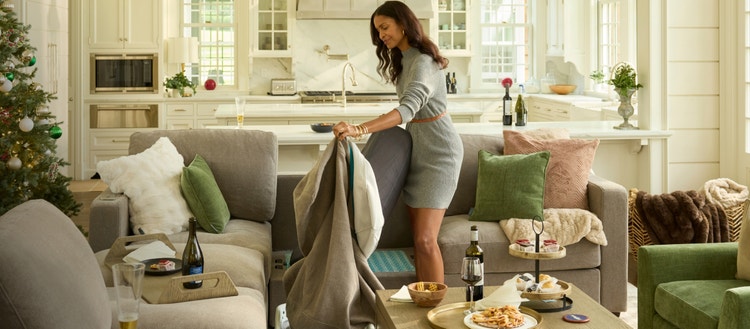
Being a good host during the holidays usually comes down to a handful of things: having enough seating for whoever shows up, a home that looks festive without a full weekend of work, food and drink that's actually manageable to prepare, a warm atmosphere, and a plan for what happens after the meal is over. It’s a lot to consider, but don’t worry. This guide breaks each step down into a checklist you can actually follow, room by room.
Holiday Hosting Tips: A Room-by-Room Checklist
The trick to hosting without burning out isn't doing everything. It's spacing out the tasks so nothing piles up at the last minute.
Two Weeks Out
- Clean the areas guests will actually spend time in: living room, kitchen, main bathroom
- Lock in your headcount and menu
- Look honestly at your seating. Will it hold everyone comfortably?
- Order any furniture, decor, or serving pieces you're still missing
The Week Of
- Buy anything non-perishable
- Put together a playlist or a short list of movies for later
- Sort out sleeping arrangements if anyone's staying overnight
- Pull out extra blankets, pillows, and linens
Day-Of
- Finish food prep and set the table
- Check your lighting. Dim overheads and swap in lamps or candles
- Turn the thermostat down a bit ahead of time. A full house heats up fast.
- Walk through your main gathering space one more time before anyone arrives
Holiday Furniture: Making Your Space Work for a Crowd
Seating, not food, tends to be the actual source of hosting stress. Guest counts rarely stay fixed. A few extra people show up, kids want to sit on the floor, someone brings a plus-one nobody planned for. A sofa that can't change shape doesn't do much to help with that.
Modular seating handles this differently. Sactionals are made up of individual seats and sides that connect and separate by hand, no tools involved. That means one setup can go from a single large sectional for movie night to two smaller loveseats for separate conversations, or spread out into a lower, open arrangement if kids want floor space nearby. Some pieces can also be reconfigured into a sleeping surface, which helps if someone ends up staying over unexpectedly.
A few ways this plays out in practice:
Going From Dinner to Lounging
Arrange the pieces into an open U-shape facing the main room so conversation can pick back up naturally once the table's cleared.
Splitting Up Smaller Rooms
Break one larger configuration into two smaller ones to create separate zones, maybe one for adults and one for kids or a game.
Planning for an Unclear Headcount
Keep a spare seat or ottoman nearby that can be pulled into the arrangement in a few minutes, rather than storing a whole extra couch for one weekend a year.
The point isn't that this furniture looks impressive. It's that it can actually shift with however many people end up in the room.
Holiday Decorating Ideas That Don't Take Over Your Weekend
Making a space feel festive doesn't require redecorating the whole house. A few small, low-effort touches tend to go further than people expect.
Lighting
Warm string lights or a couple of flameless candles usually do more than overhead lighting ever will. Try layering two or three light sources at different heights in the main room.
Textiles
A couple of seasonal throw pillows and a cozy blanket on your main seating area is one of the quickest ways to make a room feel like the holidays without much effort.
Scent
Something simple like a pot of cinnamon and orange peel simmering on the stove, or a seasonal candle, adds a lot of atmosphere for very little work.
Pick One Focal Point
Choose one area, usually wherever people sit, to be the visual center of the room (a tree, a mantel, a styled console table), instead of spreading decorating effort thin across the whole house.
Since the seating area is usually where people gather, it's worth putting a little intention there. String lights along the back, a throw draped over one arm, a coffee table with a few simple pieces on it, rather than treating that space as an afterthought.
Hosting a Holiday Movie Night
A movie night is one of the simplest ways to give a group something to do once dinner's over, especially with a mixed-age crowd. Its success mostly comes down to two things: whether everyone has a comfortable place to sit, and whether the sound holds up.
Setting Up the Space
- Make sure everyone has a clear view of the screen. That may mean rearranging your normal daytime layout
- Turn off or dim overhead lights and rely on something softer, like bias lighting behind the TV
- Get blankets out before the movie starts, not partway through
Why Sound Matters Just as Much as Seating
Built-in TV speakers are usually thin and don't fill a room well. A separate soundbar or speaker setup fixes that, but it also means more cords, another remote, and more to store when it's not in use.
Some sectionals, including Lovesac's Sactionals with StealthTech, build surround sound and bass directly into the seating itself, so there's nothing extra to set up or put away. For a holiday movie night specifically, that means the room can function like a small home theater without any additional equipment. People sit down, the movie starts, and the sound is already coming from where they're sitting. It tends to work particularly well in smaller living rooms or apartments where floor speakers and a full setup aren't realistic.
Quick Answers: Holiday Hosting FAQ
How many people can a sectional realistically seat?
It depends on the configuration, but modular sectionals can usually be arranged to seat anywhere from 3 to 7 or more people and can be rearranged on the spot if the group size changes throughout the event.
What's the easiest way to add extra seating for holiday guests?
Adding modular pieces to an existing setup is generally faster than buying a second couch. You can bring in an extra seat only when you need it, then take the configuration back down afterward.
How do I set up a home theater for movie night without buying new equipment?
Furniture with built-in surround sound removes the need for a separate soundbar, speakers, or wiring, since the seating itself handles the audio.
What are simple holiday decorating ideas for small spaces?
Pick one focal point (usually the seating area), layer in warm lighting, and add a few seasonal textiles like pillows and blankets instead of decorating every surface in the room.
Final Thoughts
The most successful holiday hosting setups usually aren't the most decorated ones. They're the most adaptable. Furniture that can shift with a changing guest list or for holiday games, lighting that's easy to soften, and a movie-night setup that doesn't require extra equipment all add up to a home that's ready for whatever the season brings, without a lot of extra effort behind the scenes.